Back to Blog

Astronomical Calendar & Star Chart Spring 2026

Top Skygazing Picks

March 3 — Full Moon: Total lunar eclipse, partially visible in Pittsburgh in the morning.

March 26 — Conjunction of Moon and Jupiter.

April 1 — Full Moon (Pink Moon).

April 22 — Lyrids Meteor Shower.

April 24 — Close approach of Moon and Messier 44 (Beehive Cluster).

April 25 — Lunar occultation: Moon and Regulus. East-southeast at twilight.

May 1 — First full Moon of May (Flower Moon).

May 6 — Eta Aquariid Meteor Shower.

May 18 — Waxing crescent Moon and Venus conjunction. West-northwest.

May 31 — Second full Moon of May (Blue Moon).

Spring Planet Visibilities

Mercury

Mercury: Evening – Best late October. Early evening.

Venus

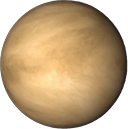
Venus: Morning – September, October, partial November.

Mars

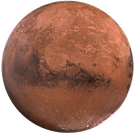
Mars: Evening – September, October. At dusk.

Jupiter
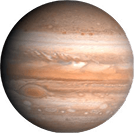
Jupiter: Evening — March, April, and May
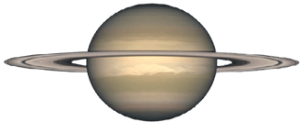
Illustration of Saturn
Saturn: Evening — Early March

Moon Phases Key

New Moon

New Moon icon

First Quarter

First Quarter Moon icon

Full Moon

Full Moon icon

Third Quarter

Third Quarter Moon icon

Moon Phases

March

3

11

18

New Moon icon

25

First Quarter Moon icon

April

1

10

17

New Moon icon

23

May

1

9

16

New Moon icon

23

31

What’s Up?

Meteor Shower Excitement

Keep a look out for the Moon to pass in front of first-magnitude star, Regulus. The bright star marks the heart of Leo the Lion, a constellation high in springtime. Regulus is located almost on the line of the ecliptic—the path the Sun, Moon, and major planets take across the sky. Each month the Moon and Regulus have a chance to meet, depending on the five-degree tilt of the Moon’s orbit. We are in a season of lunar occultations of Regulus, although the only one visible to Pittsburgh will be on April 26. March and May will see close pairings of the two.

The constellation Leo

Image credit: Kayla Waugaman, Kamin Science Center

Space News

Spring celebrates dark skies and Earth itself with International Dark Sky Week, April 13-20, and Earth Day, April 22. While International Dark Sky Week is a global celebration, Pittsburgh does its part locally to preserve dark skies year-round with warm-colored street lighting. Starting in March, Pittsburgh’s Lights Out program aims to preserve bird migration, dimming lights from midnight to 6 a.m., March 15-May 31. Nightly, at peak migration, as many as one million birds can pass over Pittsburgh. March 28 is the 20th anniversary of Earth Hour. At 8:30 p.m. local time—worldwide—lights blink off for one hour honoring Earth and the night sky

Galaxies

Image credit: NASA, JPL, STScI Hubble Deep Field Team

How do I use the star chart?
Hold it out in front of you with the direction you’re facing at the bottom of the chart. It works even better if you hold it above your head and look up at it.

Why are east and west switched?
They are only switched because you’re used to looking at maps of the ground. Hold it above your head, and you’ll see the directions line up just right.

x
Open 10 a.m.–5 p.m.
Closed Tuesdays.