Back to Blog

Astronomical Calendar & Star Chart Summer 2026

Top Ten Skygazing Picks

June 2 — Hercules Globular Cluster, M13, overhead at midnight. Binocular viewing.
June 5 — Venus at highest altitude in evening sky.
June 8 — Venus and Jupiter conjunction at dusk.
June 17 — Crescent moon, Jupiter, Venus conjunction at dusk. M44 binocular viewing. Lunar occultation of Venus. Daytime, viewing caution advised.
July 7 — Moon and Saturn conjunction. Early dawn.
July 11 — Moon and Mars conjunction. Early dawn.
Aug. 3 — Comet 10P/Tempel I predicted peak brightness. After midnight. Southern view.
Aug. 5 — Mercury highest altitude. Early dawn.
Aug. 13-14 — Peak of Perseid meteor shower.
Aug. 27 — Partial Lunar eclipse. 93%.

Summer Planet Visibilities

Mercury

Mercury
Evening — Brief appearance June
Morning — Brief appearance July

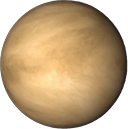
Venus

Venus
Evening — June, July, August

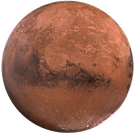
Mars

Mars
Morning — July, August

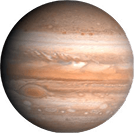
Jupiter

Jupiter
Evening — June
Morning — August

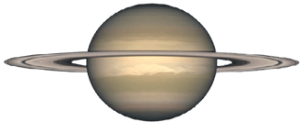
Illustration of Saturn

Saturn
Morning — June, July, August

Moon Phases Key

New Moon

New Moon icon

First Quarter

First Quarter Moon icon

Full Moon

Full Moon icon

Third Quarter

Third Quarter Moon icon

Moon Phases

June

8

14

New Moon icon

21

First Quarter Moon icon

29

July

7

14

New Moon icon

21

First Quarter Moon icon

29

August

5

12

New Moon icon

19

First Quarter Moon icon

29

What’s Up?

Meteor Shower Excitement

Welcome the annual Perseid Meteor Shower! The peak of the shower is Aug. 13-14, but several days before there are also great prospects to leave city lights behind and observe under warm summer nights. The radiant point of the shower is the constellation Perseus which rises post-midnight. Up to 140 meteors an hour are expected. With a new moon casting little light, it could be a great show. Also, late July/early August, look for Comet 10P/Temple I, which is predicted to reach peak brightness, Aug. 3.

Meteor shower

Image credit: Credit: NASA, Bill Ingalls

Space News

Celebrating Artemis II’s success — orbiting the Moon at the farthest distance humans have ever traveled, and returning astronauts, Reid Weisman, Victor Glover, Christina Koch, and Jeremy Hansen safely home – NASA aims for the next mission. Artemis III is underway. Its purpose will be to explore docking station possibilities in near Earth-orbit, partnering with private space companies. It is the next step closer to landing humans on the Moon. Pittsburgh’s space company, Astrobotic, aims to assist that next step with their commercial lunar lander, Griffin Mission I, set to launch in 2026.

The Moon
Image credit: Credit: NASA

How do I use the star chart?
Hold it out in front of you with the direction you’re facing at the bottom of the chart. It works even better if you hold it above your head and look up at it.

Why are east and west switched?
They are only switched because you’re used to looking at maps of the ground. Hold it above your head, and you’ll see the directions line up just right.

x
Open daily - 10 a.m.–5 p.m.